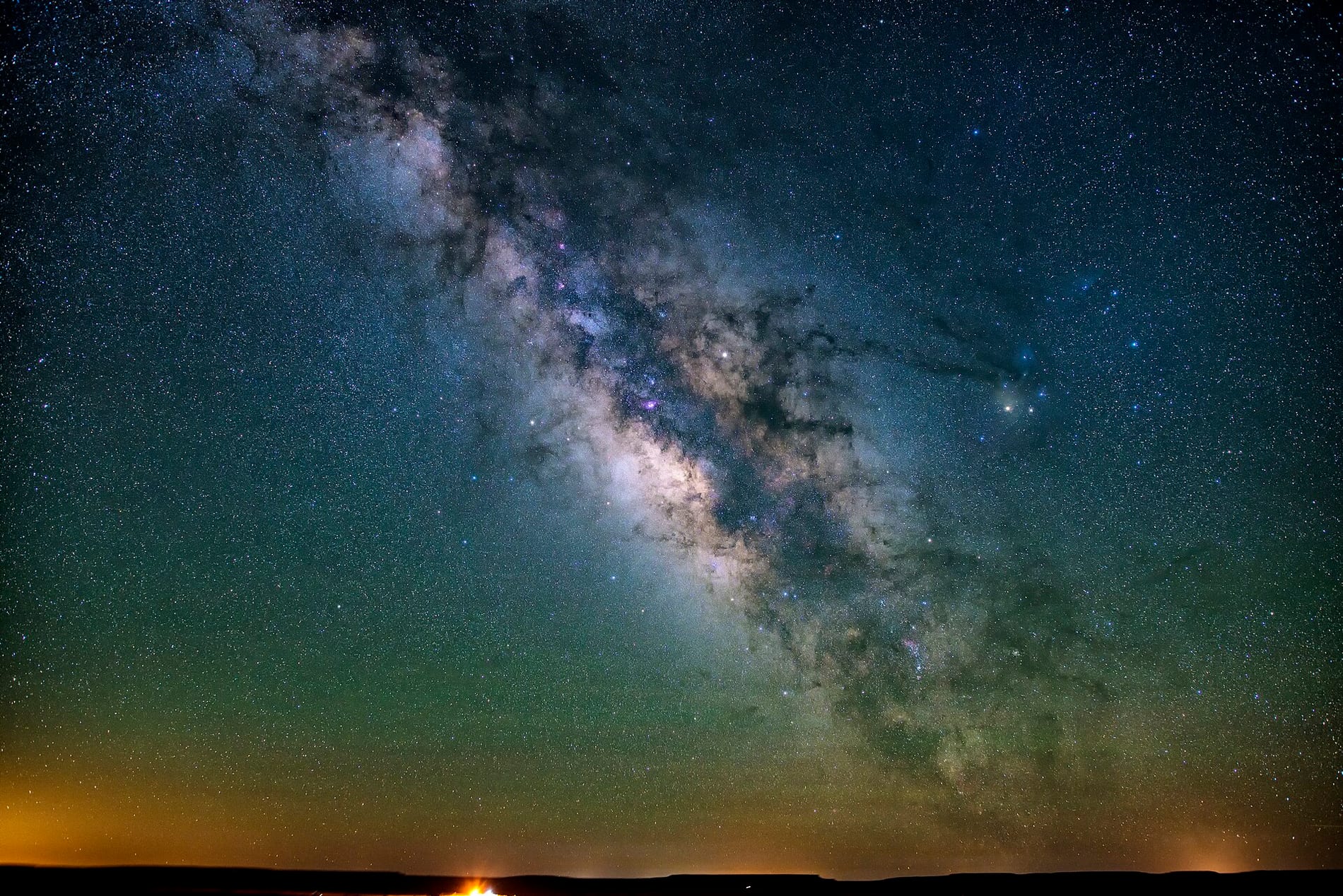
Why New Mexico skies get dark
New Mexico Tourism identifies four statewide advantages for astrotourism: high elevations, low population densities, a dry climate, and many clear nights. The agency presents that combination as the reason the state is suited to astrotourism. A dark-sky designation still does not establish a nightly forecast or legal after-dark entry.
The New Mexico DarkSky chapter lists nine certified places. They range from the remote Cosmic Campground in Gila National Forest to Valle de Oro, an urban wildlife refuge in Albuquerque. The number describes the certified roster, not nine interchangeable places to stay after dark.
What the certifications describe
DarkSky International uses several categories. A Sanctuary is the most remote category and typically has few nearby threats to darkness. A Park protects dark conditions on public land with public access. A Reserve joins a dark core to a surrounding area that supports its protection. An Urban Night Sky Place recognizes lighting stewardship in a populated setting; it does not claim pristine skies.
The access rules sit outside those definitions. Cosmic Campground and Clayton Lake allow all-night presence. Capulin Volcano has a 24-hour Night Sky Viewing area without camping, while Volcano Road closes at 4 p.m. Chaco Culture and El Morro permit night presence through their campgrounds, but their trails and archaeological areas close after hours.
Fort Union is normally open from 8 a.m. to 4 p.m. and offers monthly night programs from May through September. Salinas Pueblo Missions closes at 4 or 5 p.m. and scheduled monthly 2026 events at the Abó unit from May through October. Valles Caldera is open from dawn to dusk; the National Park Service points night viewers to pullouts along NM-4 outside the gate. Valle de Oro is a day-use refuge. Program dates, campground access, and closures should be rechecked with each manager.
Observatory visits are a separate layer
An observatory name does not automatically mean a public nighttime session. The Very Large Array is a daytime radio-astronomy destination with self-guided visits from 9 a.m. to 4 p.m. It lists a free open house for October 10, 2026, closes on Thanksgiving and Christmas, and can close for winter weather. It is not a stargazing venue.
Apache Point Observatory opens its grounds during daylight hours and does not provide visitor access to its buildings. Sunspot Solar Observatory publishes conflicting status information across its official pages, so call (575) 434-7190 before making the trip. Magdalena Ridge Observatory says public events are canceled until further notice during construction; check its current status before planning around a program.
Two certified places add observing infrastructure to their access. Chaco Culture has an observatory at the visitor center, with summer programs dependent on staffing, and has worked with The Albuquerque Astronomical Society since 1991. Clayton Lake has a park observatory with a 14-inch telescope. The park directs visitors to call (575) 374-8808 for current star-party schedules.
Winter viewing changes the target and the clothing
Longer winter nights provide more hours of darkness before midnight. Orion and the winter Milky Way are overhead in winter, while the bright galactic core is a late-May-through-October target in the Gila National Forest’s Cosmic Campground guidance. Season matters because a dark night in January presents a different sky from a dark night in July.
Cold is the practical limit at higher sites. Capulin Volcano says winter nights can fall into the teens or lower and occasionally below zero. Chaco Culture also warns that winter camping nights can reach the teens or lower Fahrenheit. A winter plan therefore needs an official access check, a current weather check, and clothing for the site’s elevation, even when the daytime forecast is sunny.